
Chapter 6
Invitations reach the whole hamlet on a cloudy morning. Pedro goes with his grandparents to the isolated farm. After the party, the hostesses call the bravest men inside. Six go in. Faced with the proposal to confront the mysterious old woman in the closed room, five back out — only Pedro accepts.
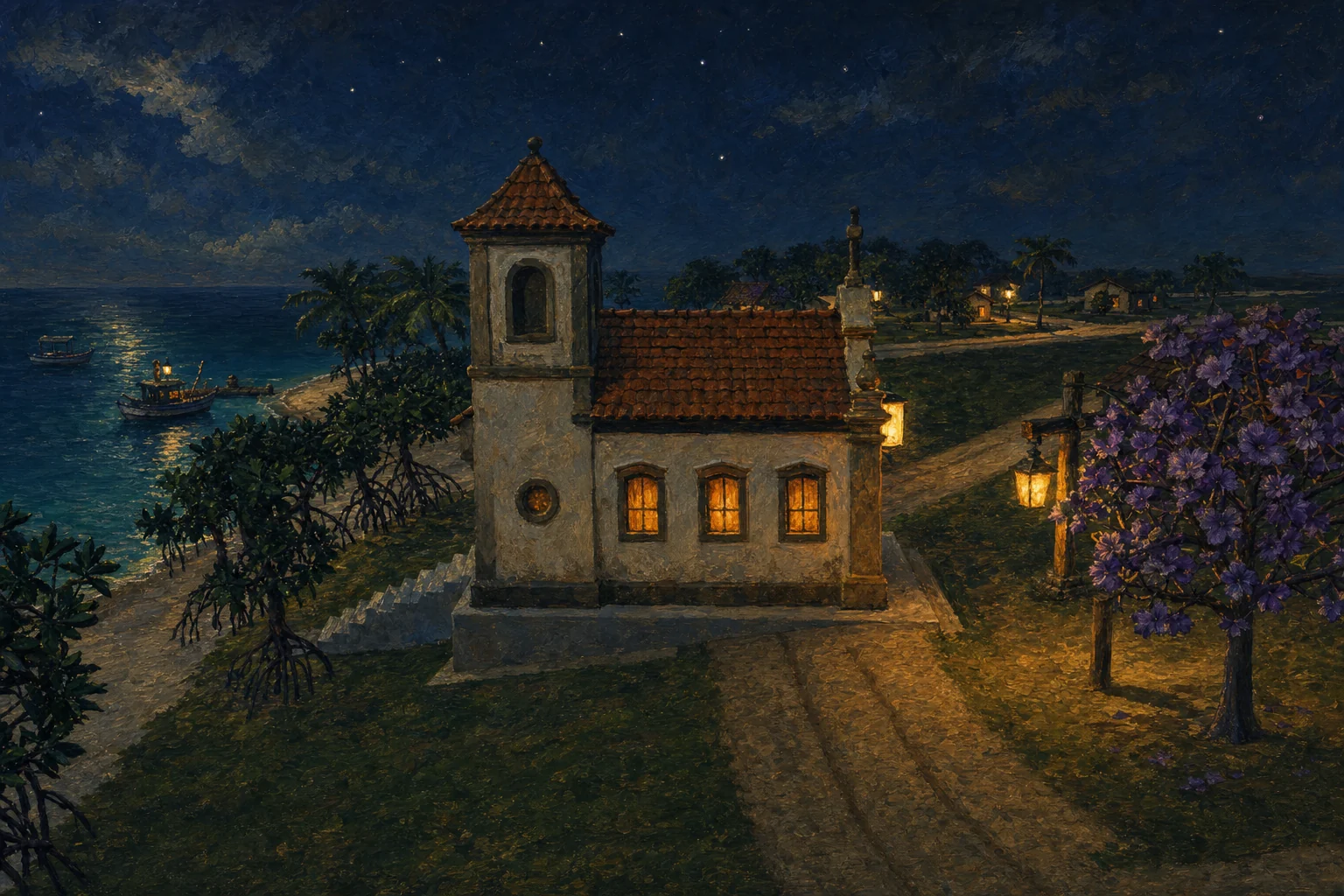
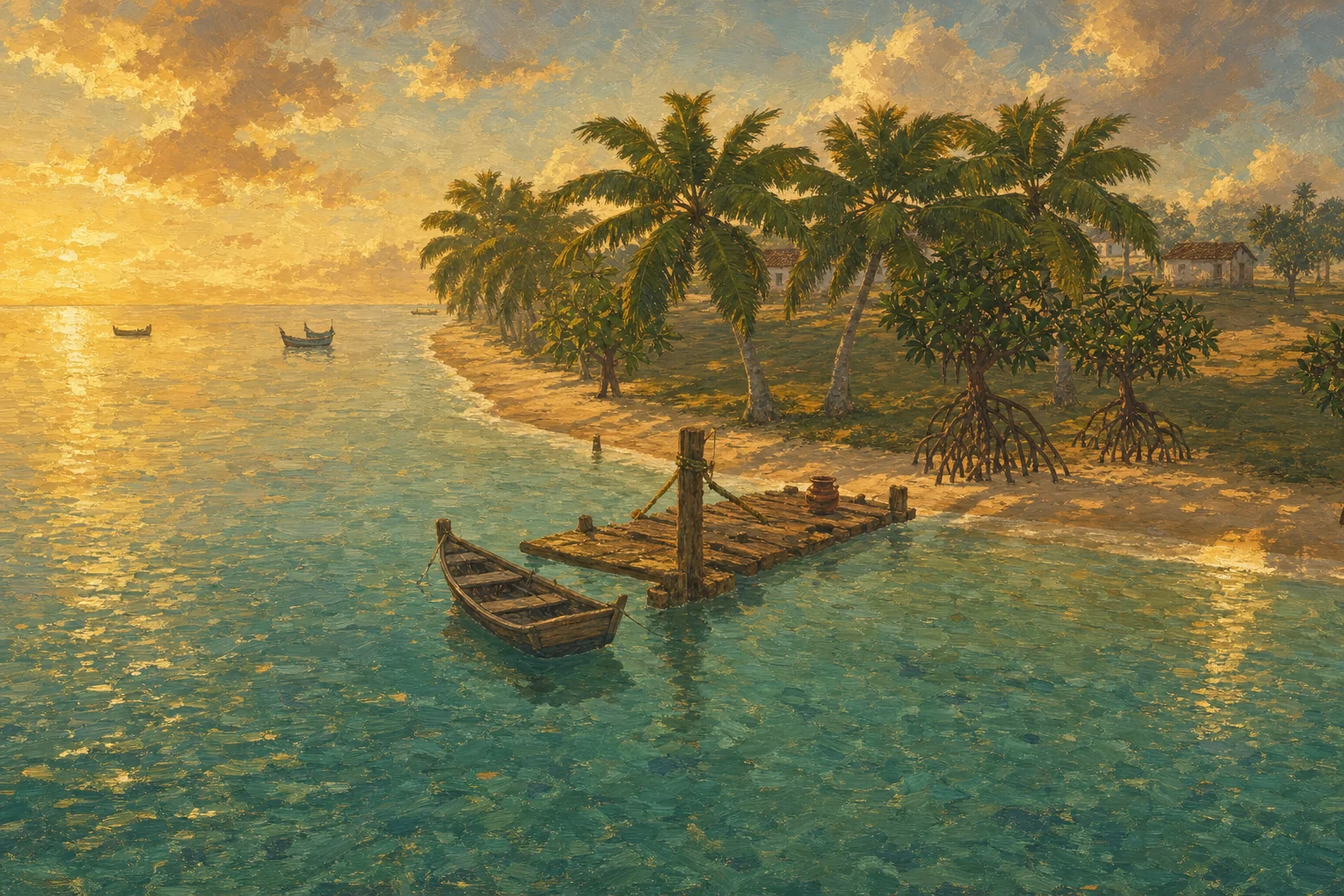
On a cloudy morning when the sun hid faintly behind the clouds, everyone in that hamlet woke to a rather peculiar attraction. There was an isolated farm in a distant, little-visited place, which had sent out many invitations to all the residents of the surrounding region. It said that people should come to that place, for there would be a great event there. As is very common in such small places, everyone knows everyone, and the invitation spread quickly, stirring them to be at the appointed place. Pedro Nolasco da Encarnação, a young fisherman, was one of the most eager residents wishing to attend. Even without knowing that farm, which was very isolated, everyone believed it was a place full of plenty and that there were beautiful mulatto slave women brought from Africa.
Moments: The invitation · The crossing through the forest · Arrival at the farm · The call to the brave · The circular hall and the narrow door
Chapter 6 · An Invitation by Chance
Invitations reach the whole hamlet on a cloudy morning. Pedro goes with his grandparents to the isolated farm. After the party, the hostesses call the bravest men inside. Six go in. Faced with the proposal to confront the mysterious old woman in the closed room, five back out — only Pedro accepts.
Chapters 6 and 7 are the author's original prose, transcribed without editing, and they use period and narrator vocabulary (“slave women,” “mulatas,” “master”). The site should present them as literary text, with this note, and not rewrite them.
On a cloudy morning when the sun hid faintly behind the clouds, everyone in that hamlet woke to a rather peculiar attraction. There was an isolated farm in a distant, little-visited place, which had sent out many invitations to all the residents of the surrounding region. It said that people should come to that place, for there would be a great event there. As is very common in such small places, everyone knows everyone, and the invitation spread quickly, stirring them to be at the appointed place. Pedro Nolasco da Encarnação, a young fisherman, was one of the most eager residents wishing to attend. Even without knowing that farm, which was very isolated, everyone believed it was a place full of plenty and that there were beautiful mulatto slave women brought from Africa.
Pedro was accompanied by his grandparents, who also seemed very curious to know what it was all about. Everyone traveled however they could; some went by cart and others even went on foot along the trails through the very dense Atlantic Forest. It was a very difficult journey, for at many points there was no clear path to the destination. So that everyone could travel safely, they helped one another through the nearly untouched passages. On reaching the distant farm, they entered through the main iron gates, which as yet showed nothing of the magnitude of the place. They were low, flimsy things, perhaps just one meter high and about five meters wide in all. At the entrance there was a guardhouse built of old masonry from Brazil's colonial era. It stood just to the right of the gate, but it had neither doors nor windows, giving the impression that no one had kept watch there for a good while.
– Welcome! It is good to say welcome to you. Today is a good day and having you here is good. Everyone is asking why we called you. We are neighbors who keep the gates closed and who don't show ourselves much. Some things have changed, and from this day on we hope for more visits. Everyone must be very curious to know all about today, so I will tell you everything. We called you to enjoy yourselves, to have a good morning and a day like no other. Everyone was invited, but now only the bravest men should come. We will do some activities that will require boldness and courage. Come and enter our house if you believe you are fit for this.
At that moment the most virile men of the hamlet stood up and at once made themselves ready to accept the invitation. They acted differently from all the others who heard this announcement and were completely overcome with questions. Pedro didn't want to be left behind in this test of how virile he might be and promptly offered himself to take part like the others. He was a young lad and didn't have many of those virile qualities the others had. He was small, thin and seemingly weak. The two hostesses led the group of men up the stairs into the farmhouse. There were exactly six participants, counting Pedro. Those who stayed waiting outside the house were given distractions such as music and good food. Everything outside then became a party while inside, deeper and deeper among the rooms of that dwelling, everything grew quieter and more silent. Then the women stopped the group in an empty room and presented the awaited challenge. This time, it was the younger woman who spoke:
Before anyone could volunteer, some very strange sounds were heard from inside. They could make them out as moans of suffering. Fear of the unknown took hold of everyone, and even the bravest felt stripped of their vitality and of the blood in their veins. The younger woman explained that they had no need to fear, for in that room there was only another woman. She was the most mysterious one, the matriarch of the society that had lived on the farm for many years, and it was she who was waiting for them inside. Some details about this unknown suitor were not made clear by the two women, and the things said between the lines did not much please those present. They had just been with several young women, and now they simply had to give themselves over to a mysterious old woman who provoked fear with the strange sounds she made. That was something they did not understand and were not willing to face.
The men began to dress again and went back through the corridors grumbling about what had happened. At the end of that retreat, only Pedro remained in the room, for he felt somehow enchanted by the young woman who had received him. In an unexpected move, he decided to show a courage grounded in nothing except, perhaps, an impulsive attempt to impress the one who had enchanted him. Thinking there would be no harm in doing what was proposed, he raised his arm and said he would enter the dimly lit room. As if it were a trophy in advance, Pedro received a brief smile from his beloved when he showed he would be the only one there to accept the challenge. People are often driven to make rash decisions by the force of their feelings. Pedro would taste the flavor of a bad choice because of that act, driven by an unnecessary proof of courage.
Moments: The invitation · The crossing through the forest · Arrival at the farm · The call to the brave · The circular hall and the narrow door