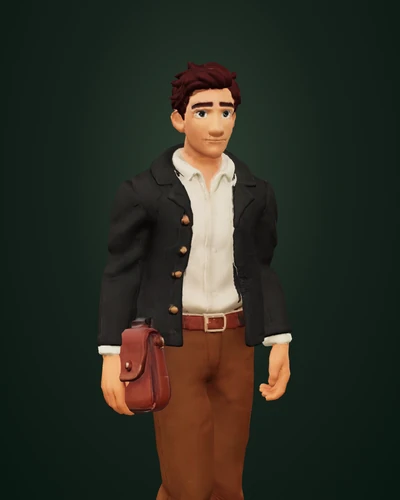
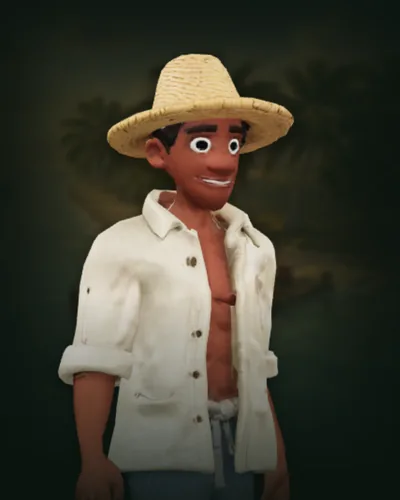
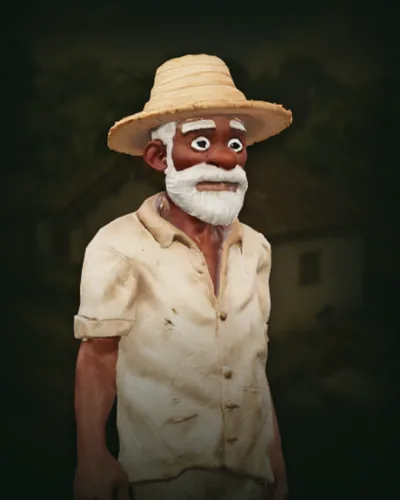
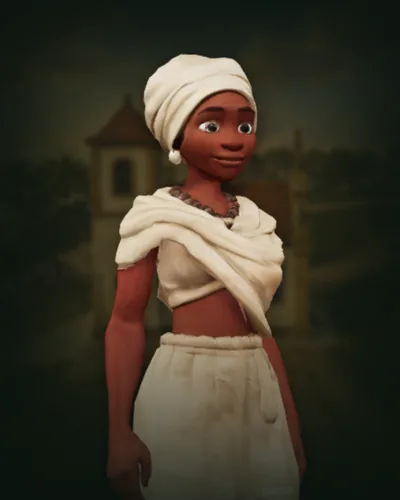
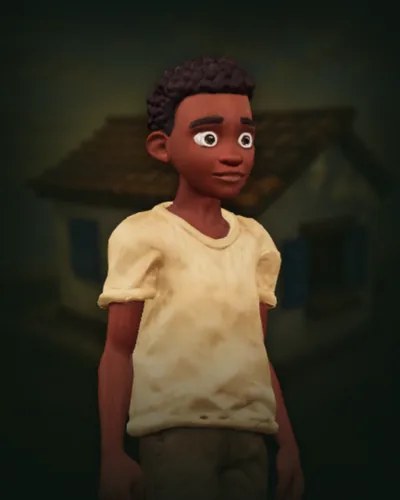
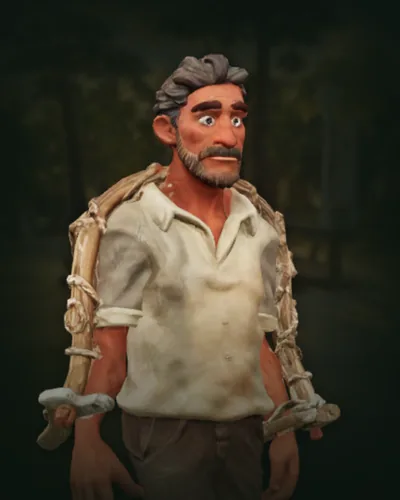
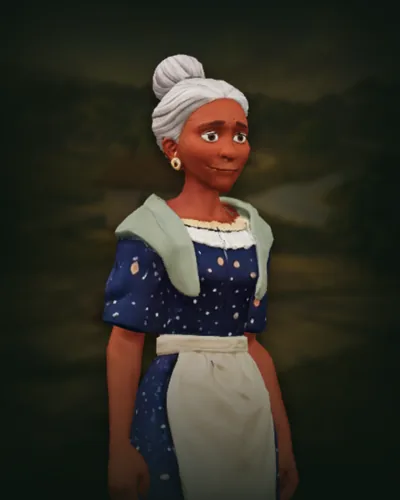
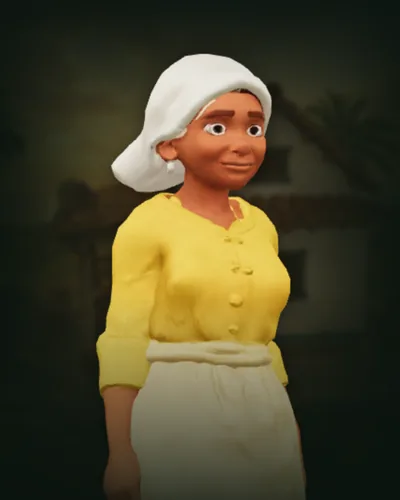
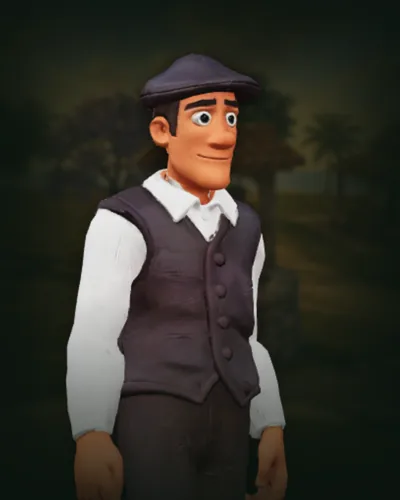
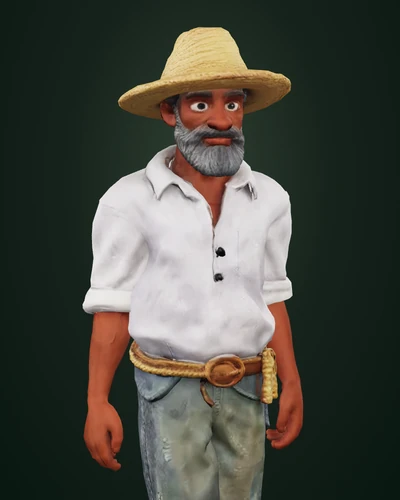
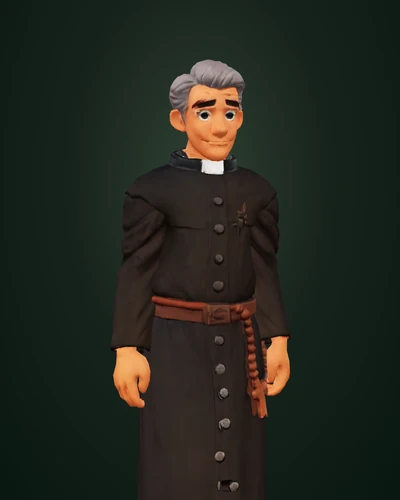
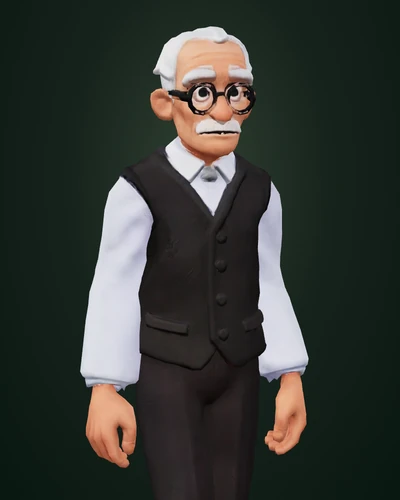
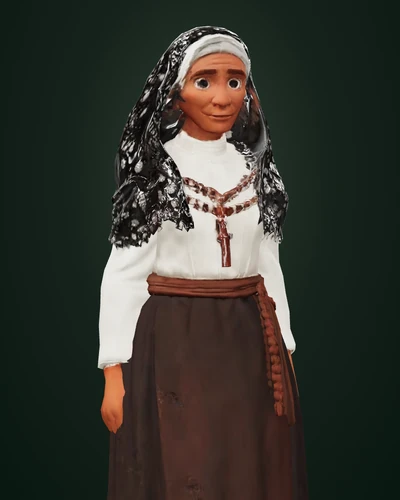
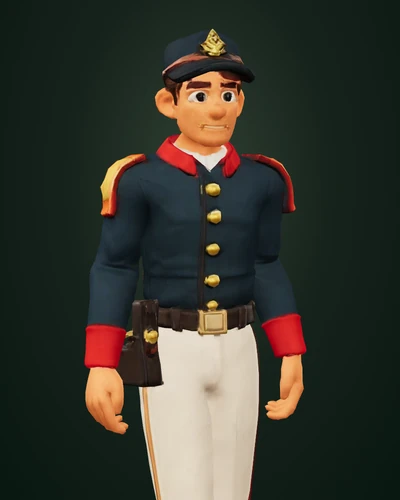
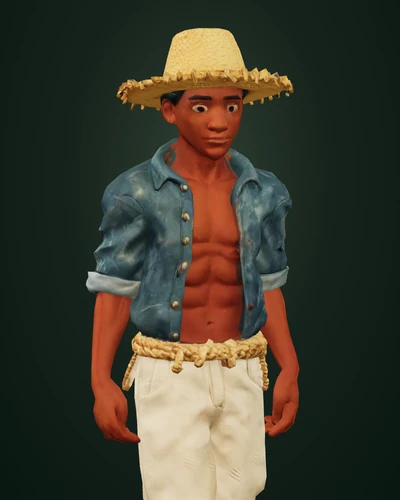
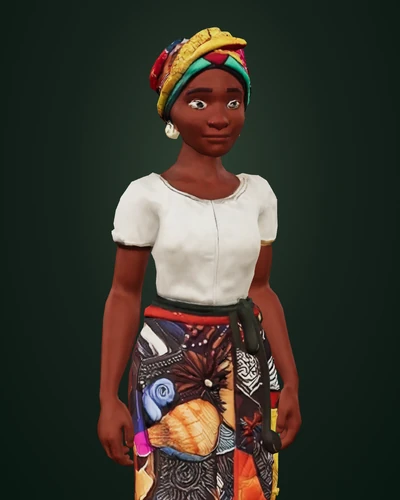
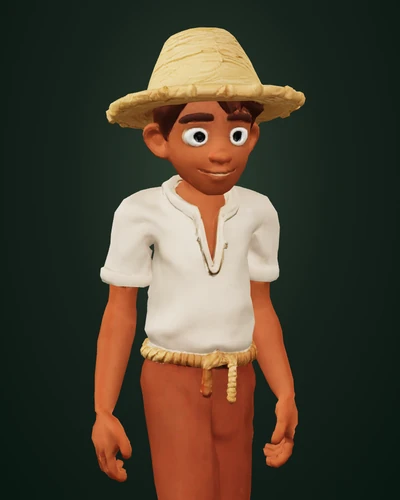
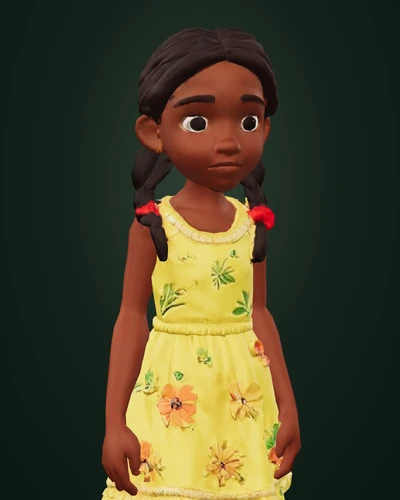
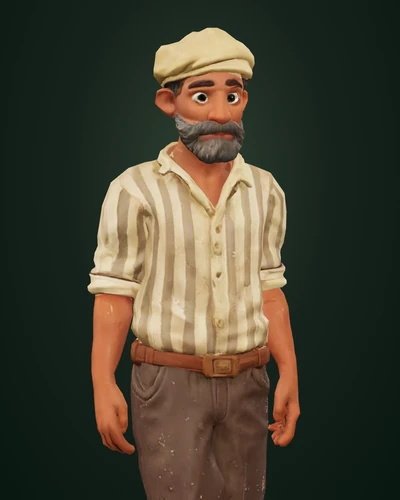
People with names, routines and a will of their own. Meet the villagers, their stories, ties and voices.
The villagers
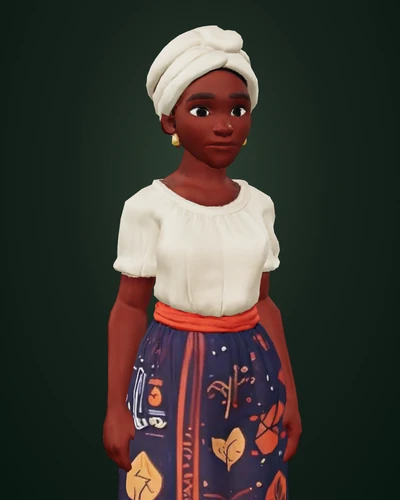
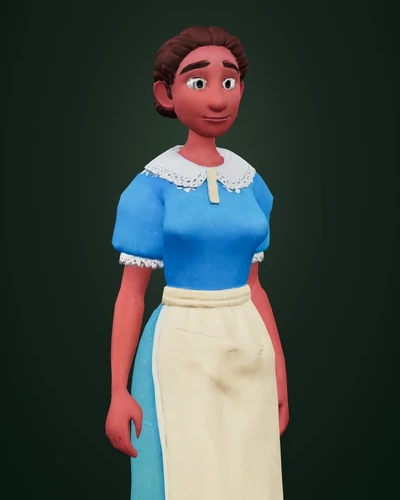
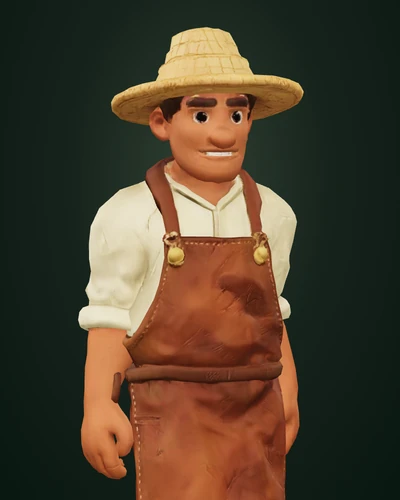
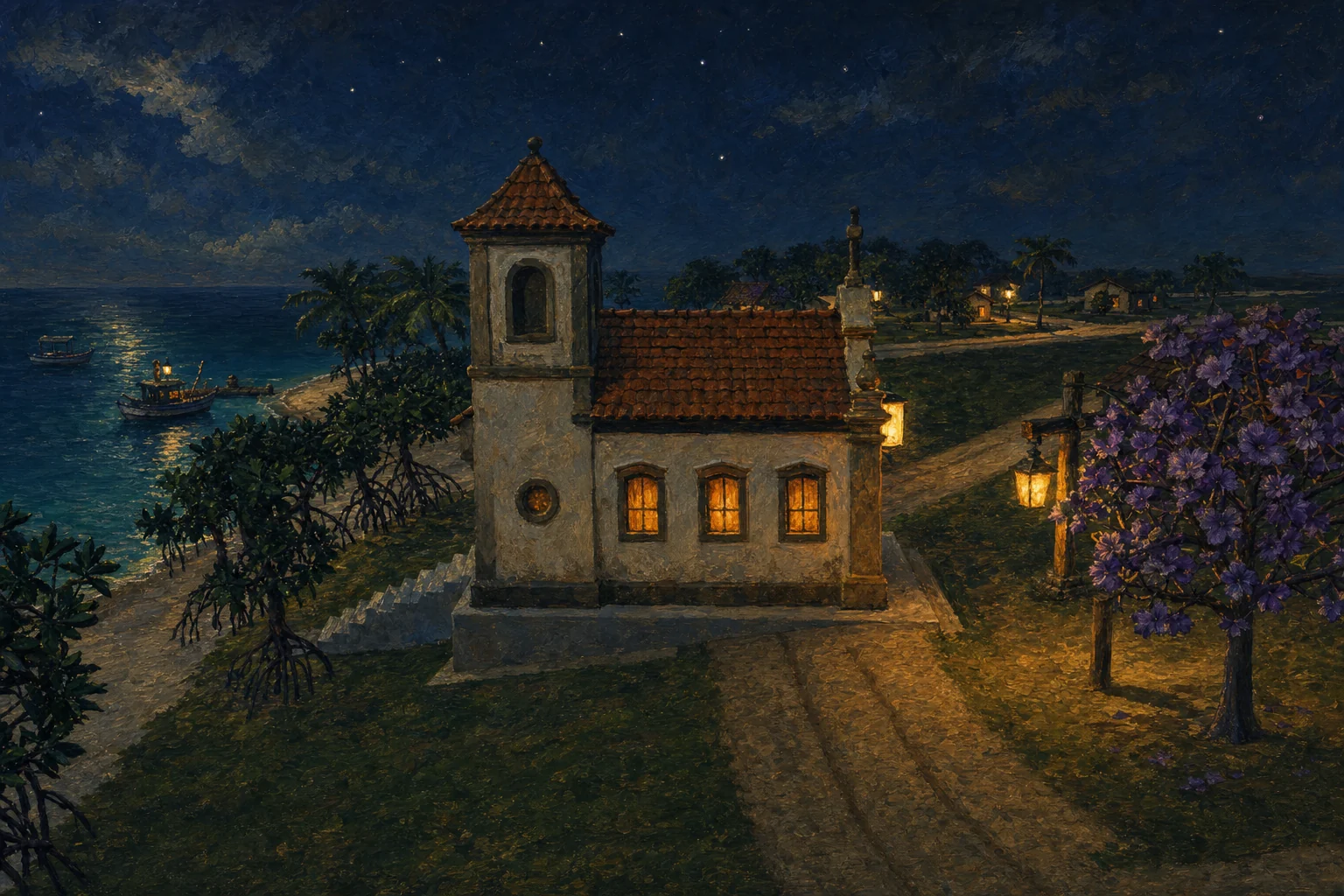
The village has people with names and wills of their own: Seu Benedito, who wants to sell the plateau after forty-two harvests; Dona Zefa, a folk healer who won't sell her mother's land but trades favors; Cosme, the grandson who dreams of Salvador; Tonho, the fisherman in debt for having cured his mother; Dona Filó, who waits at the door for her son; Dona Candinha, the garapa seller who knows everything that passes through the square; and Damião, caretaker of a cemetery no one else cared for anymore. Meanwhile, an unsigned invitation, nailed to the board in the square, summons the whole hamlet to an isolated farm on the other side of the big river — land that, the old folks say, never gave anything to anyone.
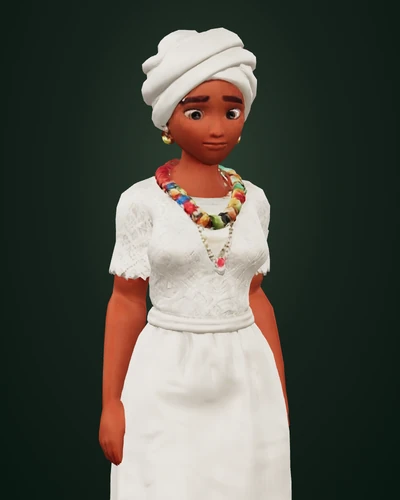
The valley's herb woman: wattle-and-daub house in the morning, the Well in the afternoon; she sends the player to fetch the mountain herbs at the Lookout.
The prompt used in Tripo
Dona Zefa, an elderly Black woman herbalist from Bahia in 1887, standing in T-pose with arms straight out: white head wrap, long cotton skirt, shawl, bead necklace, full body character.
26 ties
Grandmother and grandson, mother and son, debt and promise
Nobody in the village lives alone. The ties below come from the game's dialogue and quests.
Grandmother and grandson
She has raised Cosme since he was seven, when his mother died; they live in the same house. She reads his letters and knows about the job in Salvador before he tells her.
Dona Zefa · Cosme
Grandmother and grandson
She has raised Cosme since he was seven, when his mother died; they live in the same house. She reads his letters and knows about the job in Salvador before he tells her.
Mother and son
They live together in the house by the road. She makes pirão in the morning; he leaves before. They argue every week about the debt he took on to cure her.
Dona Filó · Tonho
Mother and son
They live together in the house by the road. She makes pirão in the morning; he leaves before. They argue every week about the debt he took on to cure her.
Son and father (deceased)
Firmino, a fisherman, went down to the tide alone sixteen years ago, on a day Tonho, at eleven, said looked bad — and didn’t come back. No one says his name in that house.
Tonho · Firmino
Son and father (deceased)
Firmino, a fisherman, went down to the tide alone sixteen years ago, on a day Tonho, at eleven, said looked bad — and didn’t come back. No one says his name in that house.
Widow
She hasn’t eaten fish since the day he didn’t come up; she won’t sleep before seeing her son at the bend in the road.
Dona Filó · Firmino
Widow
She hasn’t eaten fish since the day he didn’t come up; she won’t sleep before seeing her son at the bend in the road.
Patient and folk healer
When Dona Filó fell ill, Zefa did what she knew; what was missing came on credit from the store — the origin of the 1,900-réis debt.
Tonho · Dona Zefa
Patient and folk healer
When Dona Filó fell ill, Zefa did what she knew; what was missing came on credit from the store — the origin of the 1,900-réis debt.
Debtor
One thousand nine hundred réis in the Venda do Bar’s credit book; the new net pays it off before winter, or the traveler pays and gets his ground.
Tonho · Venda do Bar
Debtor
One thousand nine hundred réis in the Venda do Bar’s credit book; the new net pays it off before winter, or the traveler pays and gets his ground.
Father
Two sons in Salvador — one in a warehouse, the other he doesn’t ask about. The older one wrote half a sheet last year; he read it some thirty times, for the handwriting.
Seu Benedito · Children
Father
Two sons in Salvador — one in a warehouse, the other he doesn’t ask about. The older one wrote half a sheet last year; he read it some thirty times, for the handwriting.
Next-door neighbors
Zefa’s land lies between the traveler’s fence and Benedito’s plateau: to reach his, you have to settle with her first.
Seu Benedito · Dona Zefa
Next-door neighbors
Zefa’s land lies between the traveler’s fence and Benedito’s plateau: to reach his, you have to settle with her first.
Mother, father and brother (deceased)
The ground was her mother’s; her father laughed at asking the river’s leave and was taken by the flood of seventy-seven; her mother held back her brother, who died there at sixty-two.
Dona Zefa · Family
Mother, father and brother (deceased)
The ground was her mother’s; her father laughed at asking the river’s leave and was taken by the flood of seventy-seven; her mother held back her brother, who died there at sixty-two.
Cousin
Found him a place at a dry-goods store in Salvador.
Cosme · Cousin in Salvador
Cousin
Found him a place at a dry-goods store in Salvador.
Nephew and uncle
It was his uncle who taught him capoeira; his grandmother called them both idlers.
Cosme · Uncle
Nephew and uncle
It was his uncle who taught him capoeira; his grandmother called them both idlers.
Interrupted courtship
He crossed the bridge every Saturday to see her; since the bridge fell, he hasn’t seen her.
Cosme · Girl across the river
Interrupted courtship
He crossed the bridge every Saturday to see her; since the bridge fell, he hasn’t seen her.
Widower
She lies in the third grave past the big cross; it was for her that he took the intendant’s paper.
Damião · Wife
Widower
She lies in the third grave past the big cross; it was for her that he took the intendant’s paper.
Son-in-law
He keeps the rusty blade of his father-in-law’s sickle; the traveler brings the wood for the handle.
Damião · Father-in-law
Son-in-law
He keeps the rusty blade of his father-in-law’s sickle; the traveler brings the wood for the handle.
Keeper of someone else's ground
The cemetery belongs to the Santa Casa de Misericórdia; the intendant only gave him the paper with his name.
Damião · Santa Casa de Misericórdia
Keeper of someone else's ground
The cemetery belongs to the Santa Casa de Misericórdia; the intendant only gave him the paper with his name.
Customer
She buys cane from the mill on the shore, the one that “swallowed twelve families”; that is why she wants the cane from the traveler’s field.
Dona Candinha · Sugar mill
Customer
She buys cane from the mill on the shore, the one that “swallowed twelve families”; that is why she wants the cane from the traveler’s field.
Witness
He names one by one the twelve families the mill swallowed; in the cemetery, the back row is theirs, from the summer of seventy-four.
Seu Benedito · Sugar mill
Witness
He names one by one the twelve families the mill swallowed; in the cemetery, the back row is theirs, from the summer of seventy-four.
Observer
From the square she sees who comes down and who doesn’t anymore: Zefa only when someone falls ill, Benedito never (his legs), Tonho without looking at anyone.
Dona Candinha · Village
Observer
From the square she sees who comes down and who doesn’t anymore: Zefa only when someone falls ill, Benedito never (his legs), Tonho without looking at anyone.
Grandson
His grandparents tell the Matinta Pereira stories on rainy nights and are going to the estate’s invitation; they bet city folk don’t last a week — Pedro bet they do.
Pedro · Grandparents
Grandson
His grandparents tell the Matinta Pereira stories on rainy nights and are going to the estate’s invitation; they bet city folk don’t last a week — Pedro bet they do.
Son
The fishing rod was his father’s; from him come the peccary scar and the leather jerkin put away for when Pedro was old enough to go into the woods alone.
Pedro · Father
Son
The fishing rod was his father’s; from him come the peccary scar and the leather jerkin put away for when Pedro was old enough to go into the woods alone.
Grandfather, uncle and mother
The axes are his grandfather’s (“they cut better for it”), the pickaxe was his uncle’s, and his mother sends the mungunzá in the iron pot.
Pedro · Family
Grandfather, uncle and mother
The axes are his grandfather’s (“they cut better for it”), the pickaxe was his uncle’s, and his mother sends the mungunzá in the iron pot.
Guide and apprentice
He waits for the traveler on the pier, teaches the whole cycle — plant, water, harvest, toast, eat — and follows wherever the traveler goes.
Pedro · Traveler (you)
Guide and apprentice
He waits for the traveler on the pier, teaches the whole cycle — plant, water, harvest, toast, eat — and follows wherever the traveler goes.
Nephew and heir
Inherits the wattle-and-daub house, the fenced field and no debts; the other heirs laughed and didn’t go.
Traveler (you) · Late uncle
Nephew and heir
Inherits the wattle-and-daub house, the fenced field and no debts; the other heirs laughed and didn’t go.
Names from the calendar
Cosme and Damião: the Candomblé feast in the game is the caruru of September 27, and “two villagers bear those names, and it’s no accident.”
Cosme · Damião
Names from the calendar
Cosme and Damião: the Candomblé feast in the game is the caruru of September 27, and “two villagers bear those names, and it’s no accident.”
Son
Tonico is the son of the carpenter Seu Epifânio and lives in the same house.
Tonico · Seu Epifânio
Son
Tonico is the son of the carpenter Seu Epifânio and lives in the same house.
Filha
Mariinha is the daughter of the food vendor Dona Ambrósia and lives in the same house.
Mariinha · Dona Ambrósia
Filha
Mariinha is the daughter of the food vendor Dona Ambrósia and lives in the same house.
1 / 5
Chosen with your feet
Catholic, Candomblé and Caboclo
Choose a faith by walking to its landmark. Each has its own talents; switching preserves your previous progress.
The faith of the calendar and of the vow. It walks with the whole village: what it gives, it gives slowly and gives to everyone together.
Catholic
The faith of the calendar and of the vow. It walks with the whole village: what it gives, it gives slowly and gives to everyone together.
Pray at the wayside cross in the square, at the chapel and at the roadside chapel.
Feast: Bom Jesus dos Navegantes
Villagers: Seu Benedito, Dona Filó, Dona Candinha, Damião, Padre Anselmo, Sacristão Zacarias, Sá Joaquina, Seu Nicolau, Guarda Aristides, lacemaker and Seu Ladislau
Three faiths, one at a time, each with its own web of talents and its own experience tally. Switching erases nothing: the others stay frozen where they stopped.
The choice is made on foot: there is no religion menu. The player walks to the marker of the faith they want and accepts it there; another faith’s marker is a silent marker. Only after walking all three (Dona Zefa’s quest, in the 2D) do the markers start to accept.
XP per act of faith, only for the active faith: rite at the marker 30, visit to a marker 8, faith quest 60, a work at one of your markers 20, celebrating at the feast 40 on top of the rite. Praying at the cross while of Candomblé yields no axé at all.
Migrating points is optional and costs 85%: the full total leaves the original faith, 15% arrives and is added to the destination. Migrating also takes 15 affinity from those of the faith left behind and gives 5 back to those of the new faith. The game states the whole number before the yes.
The faith web is the same screen as the craft talents (K key); Tab switches between the two.
The faith of leaf, iron and water. It teaches what the land and the sea give, and it teaches in a circle — no one learns alone in a terreiro.
Candomblé
The faith of leaf, iron and water. It teaches what the land and the sea give, and it teaches in a circle — no one learns alone in a terreiro.
An offering at the terreiro, hidden in the forest west of the lookout road.
Feast: Cosme e Damião
Villagers: Dona Zefa, Cosme, shellfish gatherer, washerwoman, Dona Ambrósia and Mariinha
Three faiths, one at a time, each with its own web of talents and its own experience tally. Switching erases nothing: the others stay frozen where they stopped.
The choice is made on foot: there is no religion menu. The player walks to the marker of the faith they want and accepts it there; another faith’s marker is a silent marker. Only after walking all three (Dona Zefa’s quest, in the 2D) do the markers start to accept.
XP per act of faith, only for the active faith: rite at the marker 30, visit to a marker 8, faith quest 60, a work at one of your markers 20, celebrating at the feast 40 on top of the rite. Praying at the cross while of Candomblé yields no axé at all.
Migrating points is optional and costs 85%: the full total leaves the original faith, 15% arrives and is added to the destination. Migrating also takes 15 affinity from those of the faith left behind and gives 5 back to those of the new faith. The game states the whole number before the yes.
The faith web is the same screen as the craft talents (K key); Tab switches between the two.
The faith of the bush and of the old ways. It doesn't promise plenty: it promises a body that endures, feet that walk and eyes that see far.
Caboclo
The faith of the bush and of the old ways. It doesn't promise plenty: it promises a body that endures, feet that walk and eyes that see far.
An offering at the gameleira on the shell mound, at the western tip of the beach.
Feast: Dois de Julho
Villagers: Tonho, Seu Jerônimo, Seu Epifânio and Tonico
Three faiths, one at a time, each with its own web of talents and its own experience tally. Switching erases nothing: the others stay frozen where they stopped.
The choice is made on foot: there is no religion menu. The player walks to the marker of the faith they want and accepts it there; another faith’s marker is a silent marker. Only after walking all three (Dona Zefa’s quest, in the 2D) do the markers start to accept.
XP per act of faith, only for the active faith: rite at the marker 30, visit to a marker 8, faith quest 60, a work at one of your markers 20, celebrating at the feast 40 on top of the rite. Praying at the cross while of Candomblé yields no axé at all.
Migrating points is optional and costs 85%: the full total leaves the original faith, 15% arrives and is added to the destination. Migrating also takes 15 affinity from those of the faith left behind and gives 5 back to those of the new faith. The game states the whole number before the yes.
The faith web is the same screen as the craft talents (K key); Tab switches between the two.
Tripo + ElevenLabs
From the prompt to “Well! Are you the young man from the capital?”
Text-to-3D, meshes, rigs and animations give villagers their bodies. Pedro and 21 villagers with a voice bring conversation to the valley.
Tripo Studio, HD Model H3.1, text-to-3D generation (prompt in English, T-pose), 8K texture off — 55 credits per character
Generation
Tripo Studio, HD Model H3.1, text-to-3D generation (prompt in English, T-pose), 8K texture off — 55 credits per character
Quad retopology / Smart Mesh, 40 credits, target of ~14–15 thousand triangles per character; 2K GLB export
Mesh
Quad retopology / Smart Mesh, 40 credits, target of ~14–15 thousand triangles per character; 2K GLB export
Humanoid Auto Rig with a 65-bone Mixamo skeleton, 20 credits each; done through the logged-in Studio tab
Skeleton
Humanoid Auto Rig with a 65-bone Mixamo skeleton, 20 credits each; done through the logged-in Studio tab
Studio presets with retargeting (idle, walk, run, greet_01, agree, look_around, wave_goodbye_02; Pedro also has swim), in-place animation, 1K GLB export of 3.9 to 4.7 MB; the Mixamo gestures that Build 11 adds to these clips are on the Animations page
Animation
Studio presets with retargeting (idle, walk, run, greet_01, agree, look_around, wave_goodbye_02; Pedro also has swim), in-place animation, 1K GLB export of 3.9 to 4.7 MB; the Mixamo gestures that Build 11 adds to these clips are on the Animations page
Pedro, the traveler and 21 villagers have voices generated with ElevenLabs v3, in Brazilian Portuguese: 338 lines to listen to.
Voice
Pedro, the traveler and 21 villagers have voices generated with ElevenLabs v3, in Brazilian Portuguese: 338 lines to listen to.