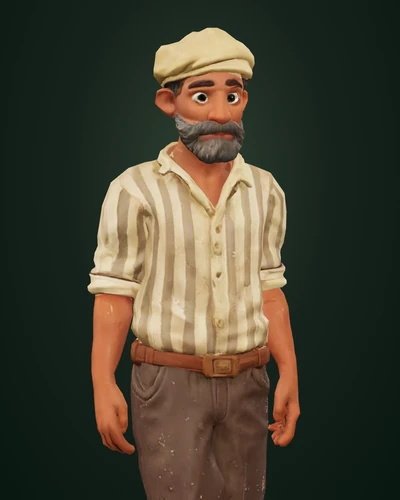
Village fisherman; the traveler’s guide in the tutorial; protagonist of chapters 6 and 7 of Batalha de Mitos; the author’s great-great-grandfather
Age
Early twenties (the Tripo prompt asks for about 25)
Where to find
Pier in the morning and afternoon, square at dusk and beach house at night; he follows quests that require guiding.
Pedro
Pedro Nolasco da Encarnação
Village fisherman; the traveler’s guide in the tutorial; protagonist of chapters 6 and 7 of Batalha de Mitos; the author’s great-great-grandfather
Age
Early twenties (the Tripo prompt asks for about 25)
Where to find
Pier in the morning and afternoon, square at dusk and beach house at night; he follows quests that require guiding.
Who they are
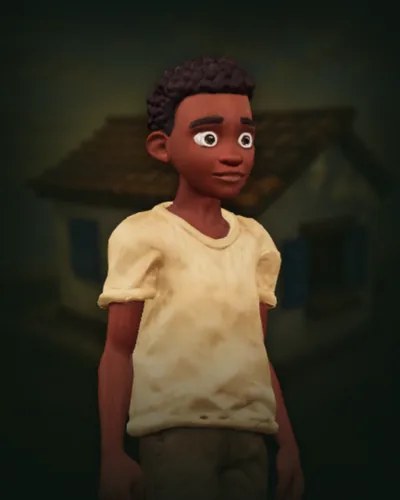
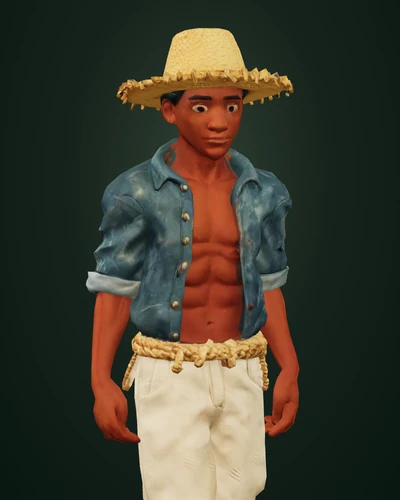
Pedro Nolasco da Encarnação is a fisherman in his early twenties in Bom Jesus dos Pobres — “it’s what there is to be around here.” He waits for the traveler on the pier from early on, because the priest read the notary’s letter at Sunday Mass and the whole village already knows the nephew of the deceased was coming. He teaches what he knows, which “isn’t much, but you can live on it”: planting manioc, breaking stone, felling trees, fishing with his father’s rod, toasting manioc flour and making pirão. And he comes along: “wherever you go, I’ll follow. Not like I’ve got anything better to do.”
He doesn’t know about the myths. What he knows of legend is scattered stories his grandparents told on rainy nights — the old woman who trades with you by night and collects by day — and he thinks it’s talk to put children to sleep. His family lives in the tools he lends: his father’s rod, the same father who left him the peccary scar and a leather jerkin put away; his grandfather’s axes, which “cut better for it”; his uncle’s pickaxe; his mother’s mungunzá, which arrives in the iron pot when the traveler’s arm grows heavy. His grandparents have already decided to accept the estate’s invitation, and he wants the traveler to go too.
In chapters 6 and 7 of Batalha de Mitos he is the only one of the six men who agrees to enter the mysterious old woman’s room — small, thin, seemingly weak, moved by the gaze of the young woman who let him in. He recognizes the Matinta Pereira from his grandparents’ stories, flees, and when the beast takes wing again he feels bound to undo the harm he woke: in the chapel tower he finds the shield and the sapphire lance, fights beside the spirit of the estate’s master and kills the owl, which turns to stone. He leaves the shield beside the statue, and the women set out free for the quilombo. The real Pedro is the great-great-grandfather of the author, Ramon Santana Santos, documented in the family tree — and the game is a gift to him.
The story of Pedro
Pedro Nolasco da Encarnação is a fisherman in his early twenties in Bom Jesus dos Pobres — “it’s what there is to be around here.” He waits for the traveler on the pier from early on, because the priest read the notary’s letter at Sunday Mass and the whole village already knows the nephew of the deceased was coming. He teaches what he knows, which “isn’t much, but you can live on it”: planting manioc, breaking stone, felling trees, fishing with his father’s rod, toasting manioc flour and making pirão. And he comes along: “wherever you go, I’ll follow. Not like I’ve got anything better to do.”
He doesn’t know about the myths. What he knows of legend is scattered stories his grandparents told on rainy nights — the old woman who trades with you by night and collects by day — and he thinks it’s talk to put children to sleep. His family lives in the tools he lends: his father’s rod, the same father who left him the peccary scar and a leather jerkin put away; his grandfather’s axes, which “cut better for it”; his uncle’s pickaxe; his mother’s mungunzá, which arrives in the iron pot when the traveler’s arm grows heavy. His grandparents have already decided to accept the estate’s invitation, and he wants the traveler to go too.
In chapters 6 and 7 of Batalha de Mitos he is the only one of the six men who agrees to enter the mysterious old woman’s room — small, thin, seemingly weak, moved by the gaze of the young woman who let him in. He recognizes the Matinta Pereira from his grandparents’ stories, flees, and when the beast takes wing again he feels bound to undo the harm he woke: in the chapel tower he finds the shield and the sapphire lance, fights beside the spirit of the estate’s master and kills the owl, which turns to stone. He leaves the shield beside the statue, and the women set out free for the quilombo. The real Pedro is the great-great-grandfather of the author, Ramon Santana Santos, documented in the family tree — and the game is a gift to him.
A day with Pedro
morning
PierPiso
afternoon
PierPiso
dusk
Square
night
Pedro's house
small hours
Pedro's house
Quests
Weapons of the woods · 3 steps
The lookout · 6 steps
Seu Benedito's plateau · 2 steps
The invitation · 4 steps
Faith in the village · 5 steps
Arrival in the village · 16 steps
The boulder ridge · 3 steps
Pedro's father's leather jacket · 1 step
The craft of those who stay · 2 steps
The great river's bridge · 7 steps
The yard and the orchard · 5 steps
The flight of the black wings · 7 steps
A day with Pedro
morningPierPiso
afternoonPierPiso
duskSquare
nightPedro's house
small hoursPedro's house
Quests
Weapons of the woods· 3 steps
The lookout· 6 steps
Seu Benedito's plateau· 2 steps
The invitation· 4 steps
Faith in the village· 5 steps
Arrival in the village· 16 steps
The boulder ridge· 3 steps
Pedro's father's leather jacket· 1 step
The craft of those who stay· 2 steps
The great river's bridge· 7 steps
The yard and the orchard· 5 steps
The flight of the black wings· 7 steps
1 / 4
Drag to turn · scroll to zoom
Loading model…The model could not be loaded. Please try again.
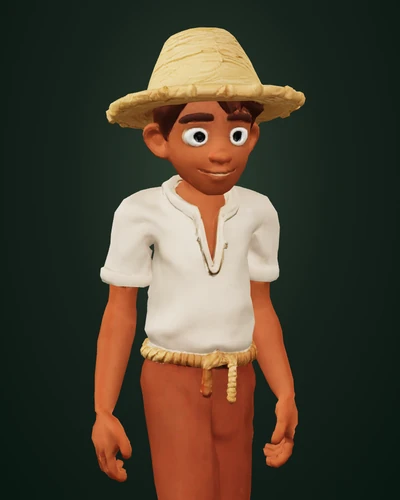
Pedro · 14,400 triangles
Pedro
The valley's guide: he accompanies the player, hands out the opening quests and is the only villager who swims (swim clip).
The prompt used in Tripo
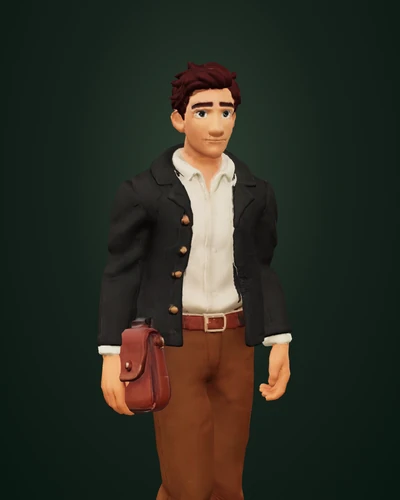
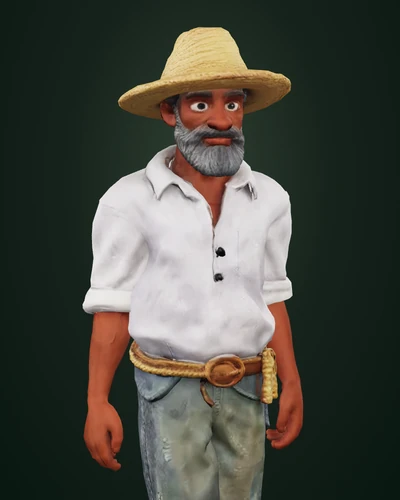
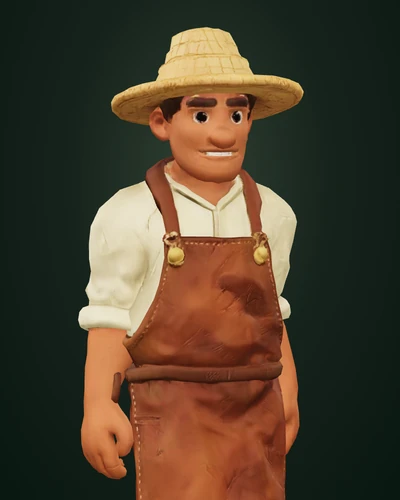
Pedro, a young Afro-Brazilian fisherman about 25 years old from Bahia in 1887, standing in T-pose with arms straight out: straw hat, open rough cotton shirt, rolled linen trousers, barefoot, friendly face, full body character.
Tripo model
Choose an animation below the model. The browser version preserves the rig and clips of the production model.
Weverton - Youthful, Energetic and Clear · eleven_v3
The prompt used in Tripo
Pedro, a young Afro-Brazilian fisherman about 25 years old from Bahia in 1887, standing in T-pose with arms straight out: straw hat, open rough cotton shirt, rolled linen trousers, barefoot, friendly face, full body character.
102 lines
Listen to Pedro
Voice generated with ElevenLabs v3, in Brazilian Portuguese. The text of each line appears under its title.
1 / 17
What they talk about
Been fishing today? A plentiful river is an early-rising river. My grandmother says whatever trades with you by night collects by day. I think it’s talk to put children to sleep. The woods change with the season. What’s a path in summer is gone by winter.
Pedro
A bit of small talk · Pedro
Been fishing today? A plentiful river is an early-rising river.
My grandmother says whatever trades with you by night collects by day. I think it’s talk to put children to sleep.
The woods change with the season. What’s a path in summer is gone by winter.
That invitation from the estate still stands. One day we’ll go.
What’s strange is nobody knows who lives on that estate. Land that big, and nobody’s ever seen the owner.
If you’re felling more trees, remember: axe for wood, pickaxe for stone. And only on what’s yours — trees on someone else’s land have an owner.
The eastern lands come one after another. First Zefa’s, which borders yours; then Benedito’s plateau.
Whoever buys land here inherits the neighbor along with it. Nobody leaves the house they were born in just because the paper changed names.
My grandparents asked about you. Said city folk don’t last a week. I bet you would.
His grandparents tell the Matinta Pereira stories on rainy nights and are going to the estate’s invitation; they bet city folk don’t last a week — Pedro bet they do.
Grandson · Grandparents
His grandparents tell the Matinta Pereira stories on rainy nights and are going to the estate’s invitation; they bet city folk don’t last a week — Pedro bet they do.
The fishing rod was his father’s; from him come the peccary scar and the leather jerkin put away for when Pedro was old enough to go into the woods alone.
Son · Father
The fishing rod was his father’s; from him come the peccary scar and the leather jerkin put away for when Pedro was old enough to go into the woods alone.
The axes are his grandfather’s (“they cut better for it”), the pickaxe was his uncle’s, and his mother sends the mungunzá in the iron pot.
Grandfather, uncle and mother · Family
The axes are his grandfather’s (“they cut better for it”), the pickaxe was his uncle’s, and his mother sends the mungunzá in the iron pot.
He waits for the traveler on the pier, teaches the whole cycle — plant, water, harvest, toast, eat — and follows wherever the traveler goes.
Guide and apprentice · Traveler (you)
He waits for the traveler on the pier, teaches the whole cycle — plant, water, harvest, toast, eat — and follows wherever the traveler goes.