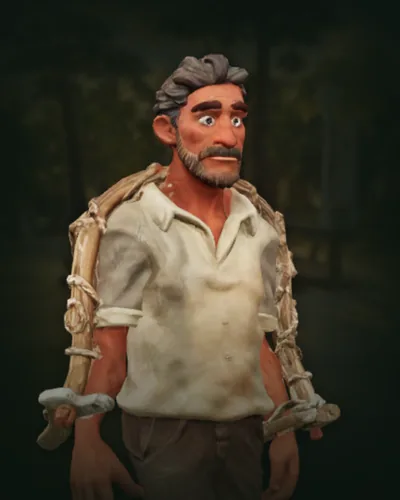
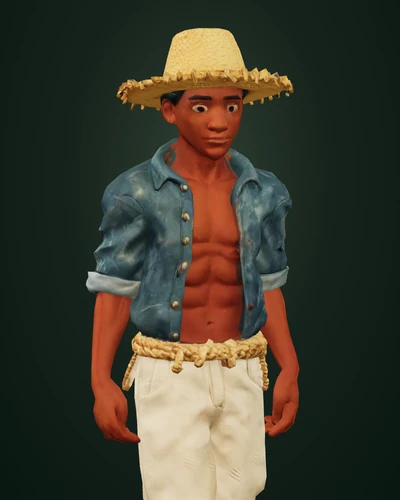
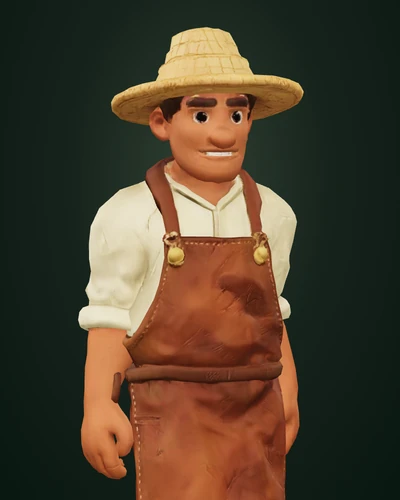
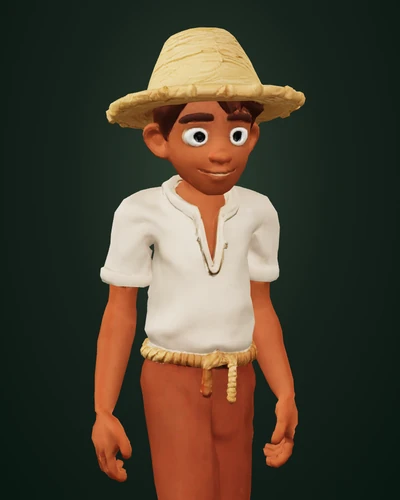
Dona Zefa’s grandson; the field’s strong arm; in the 2D, the one who teaches the roda (capoeira) to those of the terreiro
Age
Twenty-two
Where to find
In the 3D valley, the field by day, the square at dusk and the wattle-and-daub house at night; in the 2D, in his grandmother’s yard with the hoe — and in Salvador after her series
Cosme
Cosme
Dona Zefa’s grandson; the field’s strong arm; in the 2D, the one who teaches the roda (capoeira) to those of the terreiro
Age
Twenty-two
Where to find
In the 3D valley, the field by day, the square at dusk and the wattle-and-daub house at night; in the 2D, in his grandmother’s yard with the hoe — and in Salvador after her series
Who they are
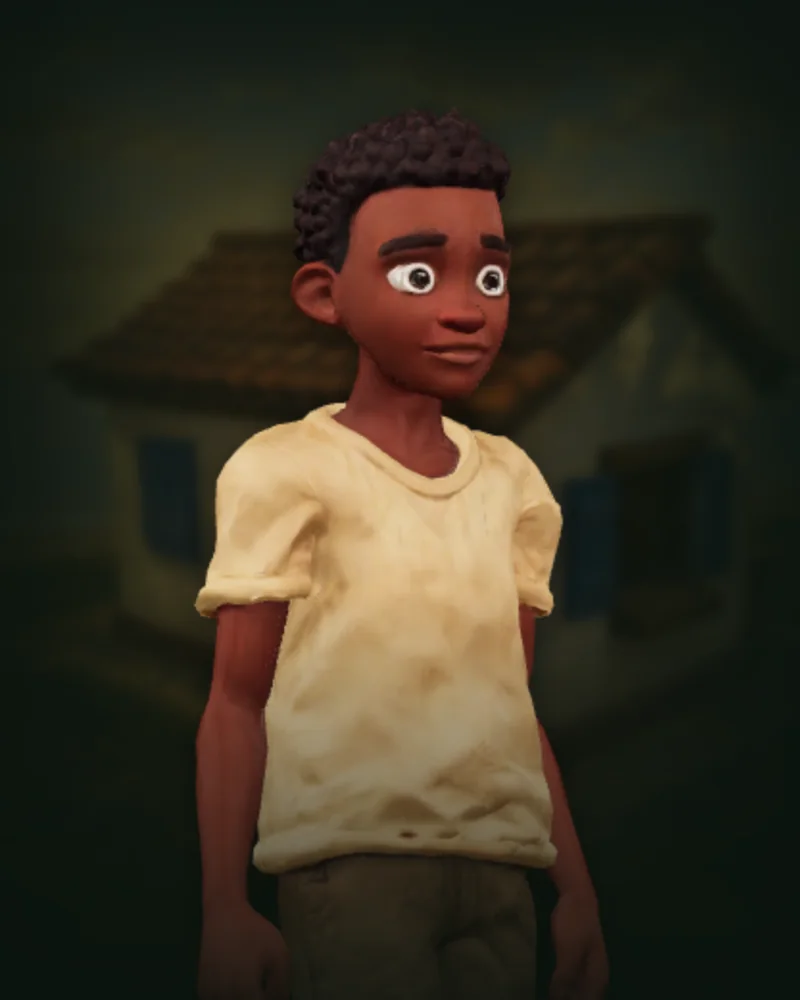
Cosme is Dona Zefa’s grandson and has lived with her since he was seven, when his mother died. She raised him, taught him to read from the almanac and put him to hoeing at nine — “all three in the same week.” He is twenty-two, with two arms and calloused hands; what his grandmother can no longer do, he does, “and there’s nothing sad about it.” He asks only one thing of whoever gives orders to the two of them: for anything heavy, call him, never her.
A cousin found him a place at a dry-goods store in Salvador. He has never seen a paved street, but he said no, because that ground doesn’t plant itself — and he hasn’t slept for a week. It is his grandmother who settles it: there is a saveiro to Salvador at six, and she sends him off light. “Cosme left on the six o’clock saveiro, and he left light. That was all she wanted.”
He reads slowly, following with his finger, and asks that someone one day read a cordel aloud to him. He used to cross the bridge every Saturday to see a girl on the other side of the river; since it fell, he hasn’t seen her. He belongs to the terreiro and, in the 2D, is the one who teaches the roda — the ginga, the meia-lua and the rasteira — behind the barracão, late in the afternoon, because in 1887 the police called it a crime; his grandmother calls it idlers’ business. If the traveler goes to the estate, he goes too: “she can fight with both of us afterward.”
The story of Cosme
Cosme is Dona Zefa’s grandson and has lived with her since he was seven, when his mother died. She raised him, taught him to read from the almanac and put him to hoeing at nine — “all three in the same week.” He is twenty-two, with two arms and calloused hands; what his grandmother can no longer do, he does, “and there’s nothing sad about it.” He asks only one thing of whoever gives orders to the two of them: for anything heavy, call him, never her.
A cousin found him a place at a dry-goods store in Salvador. He has never seen a paved street, but he said no, because that ground doesn’t plant itself — and he hasn’t slept for a week. It is his grandmother who settles it: there is a saveiro to Salvador at six, and she sends him off light. “Cosme left on the six o’clock saveiro, and he left light. That was all she wanted.”
He reads slowly, following with his finger, and asks that someone one day read a cordel aloud to him. He used to cross the bridge every Saturday to see a girl on the other side of the river; since it fell, he hasn’t seen her. He belongs to the terreiro and, in the 2D, is the one who teaches the roda — the ginga, the meia-lua and the rasteira — behind the barracão, late in the afternoon, because in 1887 the police called it a crime; his grandmother calls it idlers’ business. If the traveler goes to the estate, he goes too: “she can fight with both of us afterward.”
A day with Cosme
morning
Field
afternoon
Field
dusk
Square
night
Zefa's house
small hours
Zefa's house
Gifts
Likes Fish pirão, Grilled fish and Mungunzá. Dislikes Banana.
Quests
Cosme's capoeira · 6 steps
What the earth gives back · 4 steps
A day with Cosme
morningField
afternoonField
duskSquare
nightZefa's house
small hoursZefa's house
Gifts
Likes Fish pirão, Grilled fish and Mungunzá. Dislikes Banana.
Quests
Cosme's capoeira· 6 steps
What the earth gives back· 4 steps
1 / 1
Drag to turn · scroll to zoom
Loading model…The model could not be loaded. Please try again.
Cosme · 14,399 triangles
Cosme
The village boy: the plot in the morning and afternoon, the Square at dusk.
The prompt used in Tripo
Cosme, a teenage Afro-Brazilian boy from Bahia in 1887, standing in T-pose with arms straight out: simple cotton shirt, short trousers, barefoot, full body character.
Tripo model
Choose an animation below the model. The browser version preserves the rig and clips of the production model.
greeting, nod, idle, look around, run, wave goodbye, walk
Voice
Matheus (Energetic) · eleven_v3
The prompt used in Tripo
Cosme, a teenage Afro-Brazilian boy from Bahia in 1887, standing in T-pose with arms straight out: simple cotton shirt, short trousers, barefoot, full body character.
4 lines
Listen to Cosme
Voice generated with ElevenLabs v3, in Brazilian Portuguese. The text of each line appears under its title.
1 / 1
What they talk about
Cosme. Dona Zefa’s grandson — I’ve lived with her since I was seven, when my mother died. She raised me, taught me to read from the almanac and put me to hoeing at nine. All three in the same week. What she can’t do anymore, I do. That’s the arrangement, and there’s nothing sad about it.
Cosme
Grandma told me the ground went into your name. She was calm about it, which is saying a lot. So give me orders. Field, axe, anything that takes sun and back — I’m twenty-two and I’ve got two arms. I only ask one thing: for anything heavy, call me. Don’t call her. She’ll say she can do it, and she will, and then she won’t get up for three days.
Cosme
A bit of small talk · Cosme
Cosme. Dona Zefa’s grandson — I’ve lived with her since I was seven, when my mother died.
She raised me, taught me to read from the almanac and put me to hoeing at nine. All three in the same week.
What she can’t do anymore, I do. That’s the arrangement, and there’s nothing sad about it.
Grandma told me the ground went into your name. She was calm about it, which is saying a lot.
So give me orders. Field, axe, anything that takes sun and back — I’m twenty-two and I’ve got two arms.
I only ask one thing: for anything heavy, call me. Don’t call her. She’ll say she can do it, and she will, and then she won’t get up for three days.
The cane in that row there is ready to cut. Run the machete through and it grows back.
The land here is good. What was missing was hands, and now there are.
I used to cross that bridge every Saturday to see a girl on the other side.
Since it fell, I haven’t seen her. She must think I gave up.
If you put that back up, I’ll owe you more than a favor.
Grandma saw that invitation and told me not to go. Said it in front of everybody, without lowering her voice.
Here's my answer: if you go, I go with you. She can fight with the both of us afterward.
Hey, let me ask you something. Do you read well? Really read, like a book?
I read from the almanac, but slowly, and I follow with my finger. Grandma taught me what she knew, which wasn’t much.
If one day you pick up one of those cordel booklets and read it aloud, I’ll listen. Doesn’t have to be today.
I think about leaving. There, I said it.
It’s not because of her, understand. It’s that I’m twenty-two and the only thing that’s ever happened to me is being born here.
But she has nobody else. So I stay, and it’s fine that I stay — I just wish it were a choice, you know? And not the only thing possible.
Don’t repeat that to her. I told you because you can be trusted.
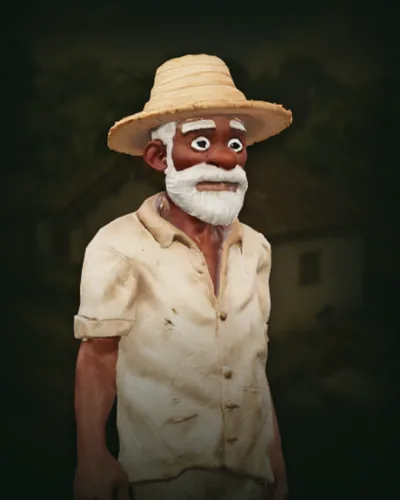
She has raised Cosme since he was seven, when his mother died; they live in the same house. She reads his letters and knows about the job in Salvador before he tells her.
Grandmother and grandson · Dona Zefa
She has raised Cosme since he was seven, when his mother died; they live in the same house. She reads his letters and knows about the job in Salvador before he tells her.
Found him a place at a dry-goods store in Salvador.
Cousin · Cousin in Salvador
Found him a place at a dry-goods store in Salvador.
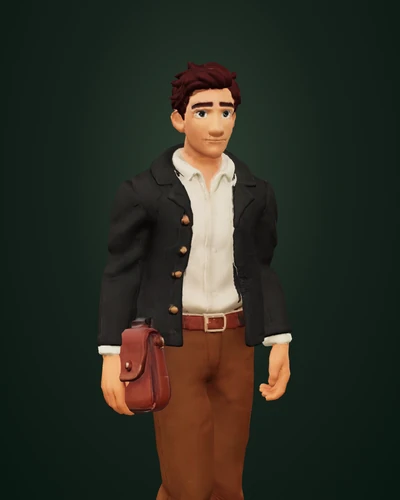
It was his uncle who taught him capoeira; his grandmother called them both idlers.
Nephew and uncle · Uncle
It was his uncle who taught him capoeira; his grandmother called them both idlers.
He crossed the bridge every Saturday to see her; since the bridge fell, he hasn’t seen her.
Interrupted courtship · Girl across the river
He crossed the bridge every Saturday to see her; since the bridge fell, he hasn’t seen her.
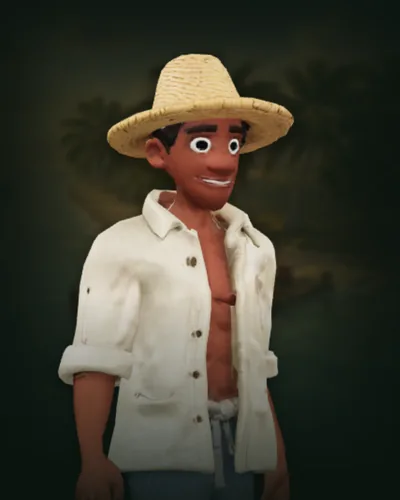
Cosme and Damião: the Candomblé feast in the game is the caruru of September 27, and “two villagers bear those names, and it’s no accident.”
Names from the calendar · Damião
Cosme and Damião: the Candomblé feast in the game is the caruru of September 27, and “two villagers bear those names, and it’s no accident.”